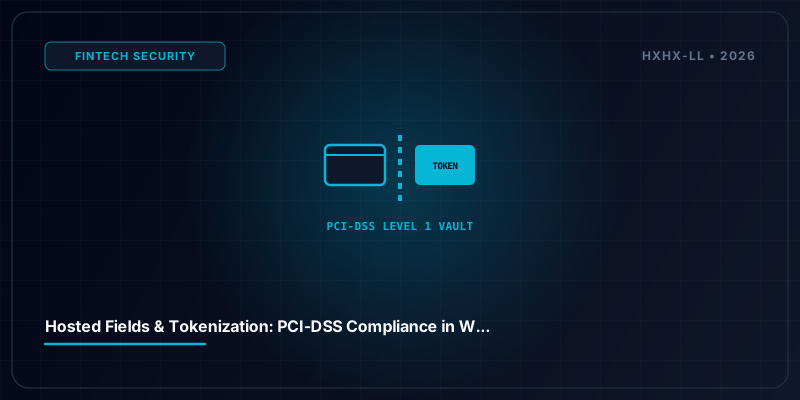
Eliminating Cardholder Data Exposure in iGaming
The Payment Card Industry Data Security Standard (PCI-DSS) enforces strict technical mandates on any organization that stores, processes, or transmits credit and debit card information. In online gaming, a data breach involving cardholder data can trigger severe merchant account revocation and crippling regulatory fines.
Modern fintech engineering resolves this risk through Hosted Fields and Cryptographic Tokenization.
The Vulnerability of Legacy Form Inputs
In legacy web forms, credit card number (PAN), expiration date, and CVV fields were rendered directly in the merchant website’s HTML DOM:
- The Threat Vector: A compromised third-party analytics script, tag manager, or Cross-Site Scripting (XSS) vulnerability could inject a JavaScript keylogger (Magecart attack) to intercept sensitive numbers as the player typed.
- Scope Liability: The operator’s entire web server infrastructure fell under full PCI-DSS Level 1 (SAQ D) audit scope, requiring hundreds of complex operational controls.
Hosted Fields Architecture (SAQ A-EP)
Contemporary gaming cashiers deploy sandboxed payment iframes:
- Isolated Micro-Iframes: The card number, expiry, and CVV inputs are loaded inside individual, cross-origin
<iframe>elements served directly from the certified payment gateway’s PCI-DSS Level 1 vault. - No Access from Parent DOM: The casino’s parent website cannot read, inspect, or intercept the contents of the iframe due to the browser’s Same-Origin Policy.
- Gateway Tokenization: When the player submits the form, the gateway encrypts the card details in its vault and returns an ephemeral, one-time cryptographic Payment Token (e.g.,
tok_8f92jkl42) to the casino client. - Server Authorization: The casino server transmits only this non-sensitive token to complete the charge. Raw card numbers never touch the casino’s servers.
This architecture reduces the casino’s audit footprint to SAQ A, providing maximum consumer security without sacrificing frictionless checkout UI.