The Demise of the Username and Password in Crypto Gaming
Traditional casino authentication requires entering an email address, crafting a complex password, and confirming an email activation link. In cryptocurrency-native casinos, this legacy onboarding workflow is replaced by Web3 Wallet Authentication (such as MetaMask, Phantom, or WalletConnect).
By utilizing public-key cryptography, players authenticate and fund accounts in a single seamless interaction.
The EIP-4361 Protocol: Sign-In with Ethereum (SIWE)
Modern Web3 authentication adheres to the formal EIP-4361 (Sign-In with Ethereum) standard:
- Client Handshake: The player clicks “Connect Wallet”. The casino server generates a cryptographically random, ephemeral string known as a Nonce tied to the session.
- Challenge Creation: The server constructs a standardized human-readable challenge string containing the domain name, wallet public address, timestamp, and unique nonce:
hxhx-ll.com wants you to sign in with your Ethereum account: 0x71C...3a9 URI: https://hxhx-ll.com Version: 1 Nonce: 84930219 Issued At: 2026-09-04T14:30:00Z - Hardware Signature: The wallet extension prompts the user to sign the message using their private key. Crucially, this action costs zero gas fees and does not authorize token transfers.
- Server Verification: The client sends the signature back to the casino server. The server runs
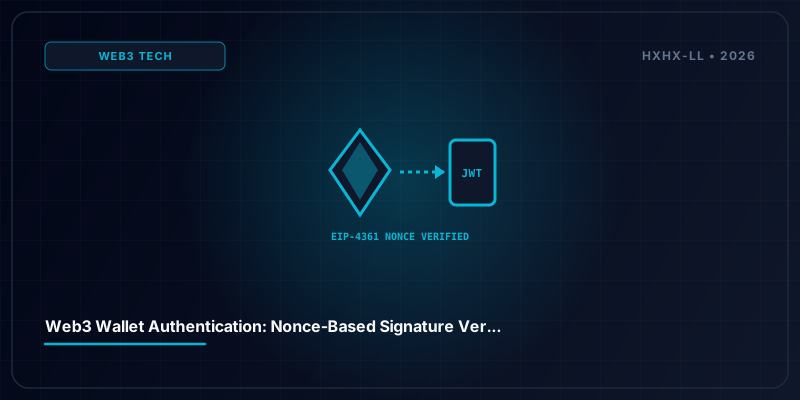
ecrecover()to mathematically verify that the signature was generated by the private key corresponding to the claimed public address. - Session JWT Issuance: Upon successful verification, the casino issues an authenticated JSON Web Token (JWT), logging the player in without ever requesting or storing a password.